News
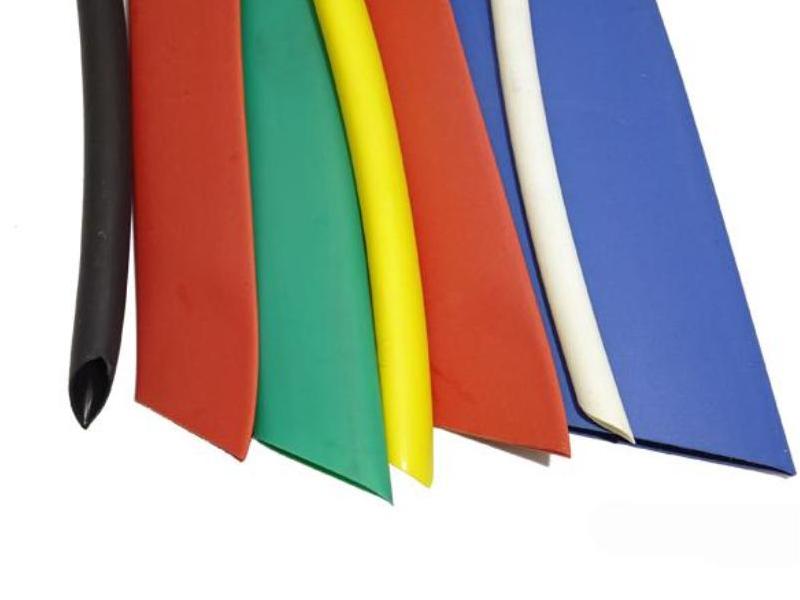
Choosing Heat Shrink Tubing for Wires—A Procurement Guide
The picking of thin-wall heat-shrinkable tubing needs thorough analysis of the size of the part being protected, the shrink ratio, the thickness of the wall after the shrinking process, the properties of the material, and the real-life working conditions, in a bid to guarantee a good fit when it is put in a new place, and insulation protection of the part....
3010-2026-
2610-2026
How Do You Choose the Right Size for a Cable End Cap?
When selecting the cable end cap, the specific model and applicable diameter range should be confirmed according to the actual outer diameter, end structure, required coverage length and end cap type of the cable, so as to avoid the influence of size mismatch on sealing and protection effect.
-
2410-2026
How Do EPDM Cold Shrink End Caps Help Cable Manufacturers Simplify Installation and End Sealing?
The EPDM Cold Shrink End Cap of CCMT adopts a pre-expansion structure, which can complete the cable end sealing without heating. It is suitable for temporary protection before cable production, storage, transportation and installation, which can help simplify the installation process and improve the efficiency of batch operation.
-
2210-2026
Heat Shrinkable End Caps Vs. Cold Shrink Cable End Caps: How to Choose Based on Your Specific Application?
Heat shrinkable end caps require heating, while cold shrinkable end caps can be installed without external heat. The right choice depends on cable size, installation conditions, and protection needs. CCMT supplies both types to meet different cable end protection requirements.
-
1510-2026
High Voltage Power Line Protection Cover: What Utilities and Contractors Should Evaluate Before Buying
A practical procurement guide to high voltage power line protection cover: what they are, how they work, key material and design specifications, installation methods, and the questions to ask a supplier before placing an order.
-
1310-2026
High Voltage Power Line Protection Covers: A Buyer's Guide to Selection, Compliance, And Installation
The job of protecting the surroundings from the high voltage lines is only necessary during certain times for a few purposes only. For instance, you would need one to cover an area where there is no possibility of increasing the height limit, to reduce the possibility of an accidental touch at a cross line point, or to guard the line against wildlife and falling objects.
-
0710-2026
How to Select Medium Wall Heat Shrink Sleeves in Cable Joint Applications?
Choosing medium wall heat shrink sleeves cannot just look at the cable model. The key is to confirm the maximum outer diameter, covering length, structural changes and installation environment of the joint, and then match the specifications.
-
3010-2026
Choosing Heat Shrink Tubing for Wires—A Procurement Guide
The picking of thin-wall heat-shrinkable tubing needs thorough analysis of the size of the part being protected, the shrink ratio, the thickness of the wall after the shrinking process, the properties of the material, and the real-life working conditions, in a bid to guarantee a good fit when it is put in a new place, and insulation protection of the part.
-
1710-2026
Application of Continuous Expansion Technology in Heat-Shrinkable Cable Accessories
CCMT applies continuous expansion technology to manufacture heat-shrinkable cable accessories, including insulation tubes, stress control sleeves, and semi-conductive composite tubes, with thicknesses up to 6.0 mm to support diverse product specifications and customization needs.
-
1610-2026
How Does a 2.5:1 Shrink Ratio Enhance the Application Versatility of Busbar Heat Shrink Sleeves?
A 2.5:1 shrinkage ratio offers greater size adaptation flexibility than a 2:1 ratio, but proper busbar insulation selection still depends on busbar dimensions, voltage requirements, and wall thickness after shrinkage.
-
0110-2026
What Is a Tri-Layer Heat Shrink Tube, And What Is the Function of Each of the Three Layers?
Tri-layer heat shrink tube uses a co-extruded composite structure of semiconductive layer, insulating layer and elastic layer, taking into account electrical stress control, insulation protection and elastic lamination. It is suitable for insulation treatment of 6 - 36kV power cable joints and up to 42kV power cable joints.