Choosing Heat Shrink Tubing for Wires—A Procurement Guide
Choosing a thin-walled heat-shrinkable tube is not just to determine a suitable size based on the diameter of the wire. The heat shrinkable tube also needs to be able to successfully sleeve the connector or terminal, fully shrink after heating, and meet the insulation and mechanical protection requirements in the actual use environment. In the actual procurement process, confirming these conditions in advance helps to reduce installation problems, material waste and rework.
Start from the Diameter of the Protected Part.
First, it is necessary to measure the outer diameter of the wire, cable, terminal or connector to be protected.
Two main sizes need to be considered carefully for the sake of the proper selection:
· Expansion inner diameter: The inner diameter of the heat shrinkable tube prior to heating needs to be big enough so that it can smoothly pass through the protected parts.
· Inner diameter after complete shrinking: The inner diameter of the heat shrinkable tube at complete shrink must be the same as the size of the protected part.
If the size of the heat shrinkable tube is too small, it may be difficult to install or even pass through the connector ; if the size is too large, it may not fully fit the target component. For example, a heat shrinkable tube with an expanded inner diameter of about 10 mm and a fully contracted inner diameter of about 5 mm has a nominal diameter ratio of 2 : 1. However, this does not mean that it applies to all components with diameters between these two values.
The Shrinkage Ratio Is Selected According to the Actual Size Difference.
The shrinkage ratio is used to describe the degree of diameter change of the heat-shrinkable tube before and after heating. Taking the 2 : 1 contraction ratio as an example, the expanded inner diameter is usually about twice the inner diameter after complete contraction. However, the shrinkage ratio does not alone determine whether the heat-shrinkable tube is applicable, and it is still necessary to check the specific expansion inner diameter and the inner diameter after recovery.
For wires and cables with uniform diameters, the conventional shrinkage ratio can usually meet the installation requirements. If the heat shrinkable tube needs to pass through a larger connector first and then shrinks to cover a finer wire, a higher shrinkage ratio can be considered to accommodate a larger diameter difference.
It is recommended to confirm the following information before purchasing:
· The maximum outer diameter of the heat shrinkable tube to be passed through.
· The minimum outer diameter to be covered after contraction.
· The inner diameter of the selected product after complete shrinkage.
Whether the wall thickness after shrinkage meets the protection requirements.
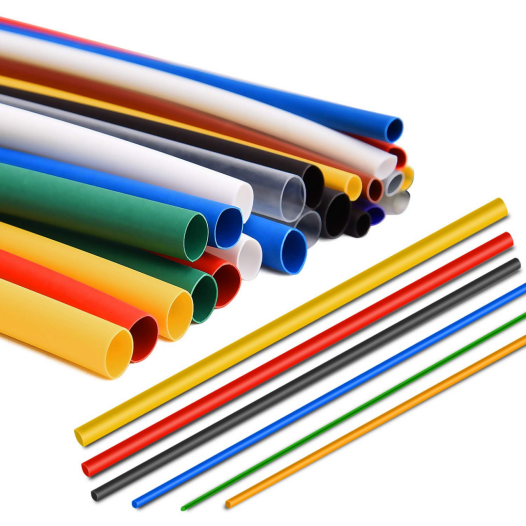
Select the Appropriate Wall Thickness According to the Protection Requirements.
Shrink tubing for wires is commonly used in electrical insulation, wire harness identification, daily wear protection and protection of wire connection parts. The relatively thin pipe wall helps to control the overall size of the component and is suitable for applications that have certain requirements for installation space.
| Application Requirements | Key Factors to Consider When Selecting Products |
| Electrical Insulation | Dielectric strength, voltage resistance, and compliance with applicable electrical standards. |
| Strain Relief and Securing | Recovered outer diameter, flexibility, and installation space requirements. |
| Daily Wear Protection | Wall thickness after recovery and actual abrasion resistance. |
| Irregular Connectors | Shrink ratio, dimensional variations, and coverage around transition areas. |
| Higher Mechanical Protection Requirements | Whether medium-wall or thick-wall heat-shrink tubing is required. |
shrink tubing for wires helps to reduce the additional cladding thickness when routing inside a compact electronic device. For cables that often contact with sharp edges, bear large friction or are subjected to obvious mechanical stress, a thicker protective layer may be required.
The reasonable selection goal is to avoid unnecessary material increase under the premise of meeting the protection requirements. If the application environment involves impact, long-term outdoor exposure or moisture-proof sealing requirements, it should also be confirmed whether the use of thin-walled heat-shrinkable tubes alone can meet the requirements.
Confirm the Material According to the Use Environment.
The material selection should consider the environmental conditions that may be encountered during the installation process and throughout the service life of the heat shrinkable tube. Crosslinked polyolefin is one of the common materials in the field of electrical insulation and wire protection. According to the specific formula and product structure, it can have certain flexibility, wear resistance and electrical insulation properties.
Before confirming the material, you can focus on the following aspects.
· What is the working temperature?
View the minimum and maximum operating temperatures specified by the specific model. The initial shrinkage temperature, complete shrinkage temperature and long-term working temperature of the heat shrinkable tube are not the same concept and cannot be replaced by each other.
· Does it come into contact with oil or chemicals?
The chemical resistance of different materials and formulations is different. If the heat shrink tubing is exposed to lubricants, cleaners, fuels or industrial chemicals, material compatibility should be confirmed.
· Is the product used indoors or outdoors?
Outdoor applications may require additional consideration of UV resistance, moisture resistance and other properties. The specific requirements should be confirmed by the product technical data or the corresponding test report.
· Are there specific certification or compliance requirements?
Automotive, electronic equipment and industrial electrical projects may have different requirements for flame retardancy, material composition or electrical performance. Before bulk procurement, the applicable standards of the project should be clarified and the corresponding test data should be checked.
Check the Shrinkage Temperature and Heating Method.
Even if the size is selected correctly, if the heating conditions are not suitable, the heat shrinkable tube may not be fully restored to the expected state.
The initial shrinkage temperature of some thin-walled polyolefin heat shrinkable tubes is about 80 ° C, and the complete shrinkage temperature is about 120 ° C. However, the specific value depends on the product model and cannot be directly applied to all heat shrinkable tubes. When purchasing, the shrinkage temperature recommended by the manufacturer should be checked, and it should be confirmed that the actual installation equipment can stably meet the corresponding conditions.
For small batch or manual installation, hot air guns are usually suitable for many types of heat shrinkable tubes ; for mass production, automatic heating equipment helps to improve the consistency of processing conditions. It is recommended to use actual wires, connectors or components for installation verification, rather than judging the shrinkage effect only in the empty tube state.
In addition, attention should also be paid to the longitudinal changes of heat-shrinkable tubes.It is a common characteristic of heat-retraction of certain heat-shrinkable pipes that their lengths would change slightly during the heat-up process. Accordingly, the length of the pieces to be cut may require a double check that the longitudinal shrinkage rate as indicated by the manufacturer is consideredIt is also important when casings are long or components are to be perfectly covered at the ends with the help of a heat-shrinkable covering.
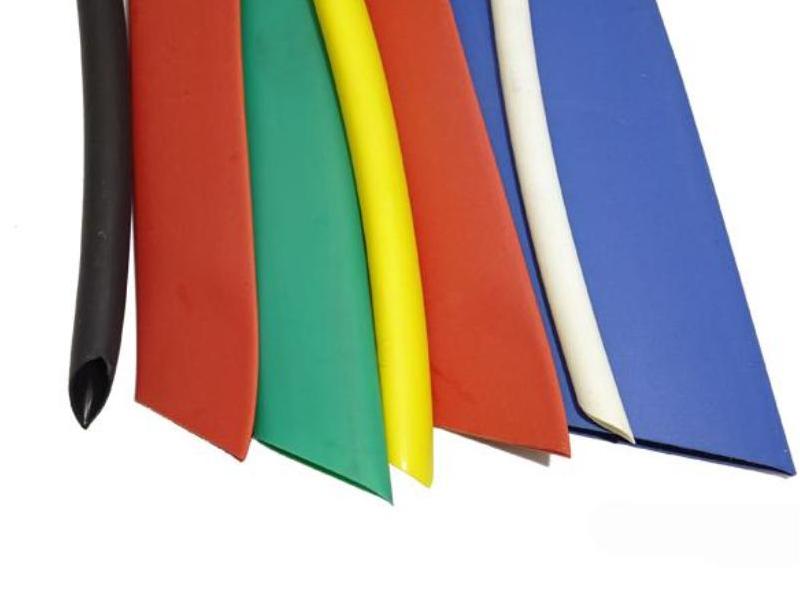
What Technical Parameters Should Be Checked Before Bulk Purchasing?
Product introduction can not completely replace the technical data table. Before confirming the purchase specifications, the product parameters should be compared with the actual application requirements.
| Technical Parameters | Main Function |
| Expanded Inner Diameter | Confirm that the heat-shrink tubing can fit over the target component. |
| Fully Recovered Inner Diameter | Determine whether the recovered dimensions are suitable for the application. |
| Recovered Wall Thickness | Evaluate the thickness of the protective layer. |
| Shrink Ratio | Determine the range of dimensional changes the product can accommodate. |
| Operating Temperature | Confirm suitability for the actual operating environment. |
| Shrinkage Temperature | Determine the heating conditions required for installation. |
| Tensile Strength and Elongation at Break | Understand the mechanical properties of the material. |
| Electrical Properties | Determine whether the product meets the relevant insulation requirements. |
| Longitudinal Shrinkage Rate | Help determine the appropriate cutting length. |
| Applicable Standards | Verify compliance with the standards required for the project. |
| Technical Parameters | Main Function |
| Expanded Inner Diameter | Confirm that the heat-shrink tubing can fit over the target component. |
| Fully Recovered Inner Diameter | Determine whether the recovered dimensions are suitable for the application. |
| Recovered Wall Thickness | Evaluate the thickness of the protective layer. |
Confirm dimensional tolerances, standard packaging lengths, optional colors, and whether the supplier can provide samples for testing.
Summary:
To select the appropriate thin-walled heat-shrinkable tube, the size of the protected parts and the adaptation requirements after heat-shrinkage should be confirmed first. On this basis, the shrinkage ratio, wall thickness, material, working temperature, electrical performance and installation conditions are comprehensively evaluated. It is recommended that the purchaser first clarify the application requirements, then match the requirements with the manufacturer 's technical data, and consult and verify before bulk procurement.
FAQ:
1. How to determine the correct size of shrink tubing for wires?
The maximum outer diameter of the heat shrinkable tube and the diameter of the parts that need to be coated after shrinkage are measured, and then compared with the expansion inner diameter and the shrinkage inner diameter specified by the product.
2. Shrinkage ratio is the higher the better?
Not necessarily. A higher shrinkage ratio can adapt to larger diameter differences, but it is still necessary to consider the degree of fit, wall thickness and practical application requirements after shrinkage.
3. What information should be provided to suppliers when purchasing thin-walled heat shrinkable tubes?
It is recommended to provide the required specifications, dimensions after expansion and contraction ( as known ), material requirements, operating temperature, application scenarios, applicable standards, purchase quantity, and color and packaging requirements.