What Problems Can the Glue Layer of Heat Shrink Medium-Wall Cable Sleeve Solve?
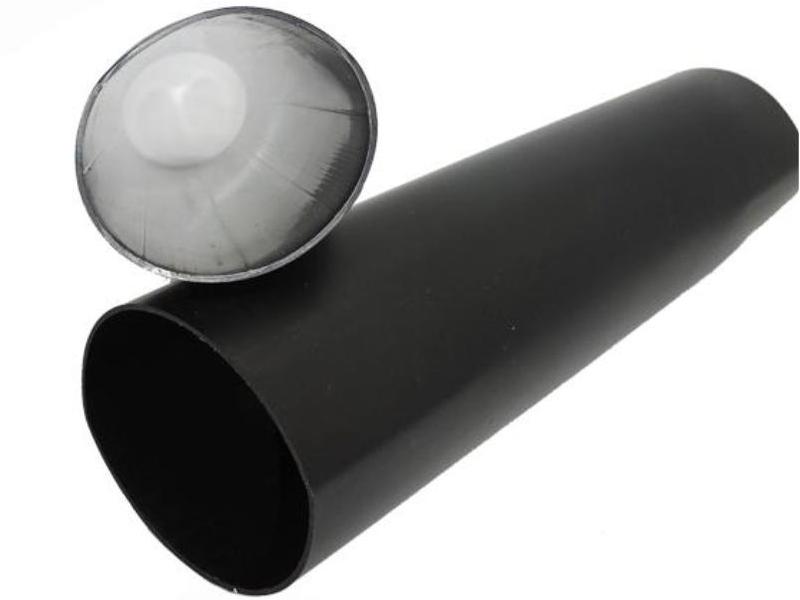
The middle wall heat shrink tubing does not just rely on the outer layer of tubing to complete insulation and protection. The inner wall hot melt adhesive layer is an important part of achieving sealing, moisture resistance and improving connection reliability. To judge whether a heat shrink medium-wall cable sleeve is suitable for cable joints, terminals and other applications, in addition to paying attention to wall thickness and shrinkage ratio, we should also focus on understanding the role of the adhesive layer and the performance of the adhesive layer.
The First Problem That the Adhesive Layer Solves Is the "Sealing" Problem.
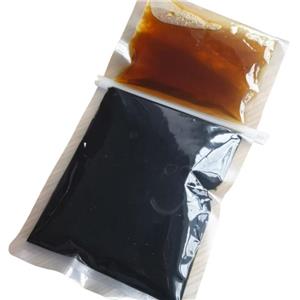
After shrinking, ordinary heat shrinkable tubing mainly relies on the fit between the tube wall and the protected object to provide protection. During the heating and shrinking process of the middle wall heat shrinkable tubing with glue, the internal hot melt adhesive will soften and flow, filling the cable surface, connection parts and gaps between pipes.
This forms not just a mechanical coating, but a continuous sealing layer that reduces the possibility of moisture, moisture, dust and other contaminants entering the connection. This is why glued mid-wall heat shrink tubing is often used in cable joints, terminations, and connection locations that require environmental sealing. In addition, analogous designs are commonly applied for moisture protection and sealing in the cable accessory sector.
The Glue Layer Can Adapt to Irregular Connecting Surfaces.
Cable joints don't generally form even cylindrical shapes. It is possible that, at the joints, there will be terminal terminals, sheath steps or parts of different diameters. If we only depend on the outer heat shrinkable material, there still will be trouble of getting the pipe exactly right in every position.
The advantage of hot melt adhesives is that they flow when heated. When the outer tubing shrinks, there is a possibility that the adhesive layer could enter the local gaps, so as to result a complete and seal between dissimilar materials and outer diameter differences. Hence, when purchasing, one should not only consider the factor of "having no " having adhesive but also be aware of and pay attention to the quality and characteristics of the adhesive layer itself.
The Adhesive Layer Also Affects Long-Term Protection.
For example, in applications such as outdoor cables, industrial equipment, and automotive wiring harnesses, the connection parts have long been exposed to environmental factors such as moisture, oil pollution, dust, and vibration. CCMT's heat shrink medium-wall cable sleeve adopts a double-layer structure of cross-linked polyolefin outer layer + hot melt adhesive inner layer. The product is designed to provide insulation, sealing and mechanical protection at the same time.
At the same time, our heat shrink medium-wall cable sleeve hot melt adhesive has a water absorption rate of ≤0.2%, and a softening point of 95 ° C; its peel strength on PE and aluminum reaches 120 N/25 mm and 80 N/mm respectively. These indicators can help buyers determine whether a product is suitable for specific applications better than a simple "waterproof adhesive layer".
Why Can't We Just Focus on the Outer Layer of Heat Shrink Tubing When Purchasing?
For the middle wall heat shrink tube with glue, the outer layer and the glue layer perform not exactly the same functions:
| Structure | Major Role |
| Cross-Linked Polyolefin Outer Layer | Insulation, mechanical protection, impact and wear resistance |
| Hot-Melt Adhesive Inner Layer | Filling gaps, bonding, sealing, moisture proof |
| Dual-Layer Synergistic Action | Provide complete insulation and environmental protection for cable joints |
Therefore, if the project has clear requirements for waterproof sealing, outdoor use or long-term environmental protection, it is not enough to only confirm the outer diameter, shrinkage ratio and wall thickness of the heat shrink tube. The adhesive layer thickness, softening point, and water absorption rate should also be confirmed with the supplier. Indicators such as peel strength.
Take CCMT's Heat Shrink Medium-Wall Cable Sleeve as an Example.
CCMT's products adopt a two-layer structure with a shrinkage ratio of 3:1. Moreover, the adhesive layer thickness of this series of products is 0.35 - 0.60 mm, and the total wall thickness specification is approximately 1.75 - 3.70 mm; the products can work continuously at-45 ° C to 125 ° C, and are mainly used for cable joints, terminals and connections in the fields of power, automobiles, industrial equipment, etc., providing buyers with comprehensive solutions for insulation, sealing and mechanical protection.
The adhesive layer in the heat shrink medium-wall cable sleeve is not a simple "auxiliary material". It is directly related to the sealing effect of the product, environmental protection and long-term stability of the connection parts. Therefore, when purchasing heat shrink medium-wall cable sleeve with glue, in addition to confirming the cable size and shrinkage ratio, it is also recommended to focus on asking about parameters such as glue layer thickness, water absorption rate, softening point and peel strength.
For different cable size and application environments, CCMT can provide mid-wall heat shrink tubing with corresponding specifications, and assist in product selection according to actual application needs.