What Is the Difference Between Medium Wall Heat Shrink Tubing Andheavy Wall Heat Shrink?
Both mid-wall heat shrink tubing and thick-wall heat shrink tubing can be used for cable insulation, sealing and mechanical protection, but the two are not simply the difference between "thicker" and "thinner". What buyers really need to pay attention to when selecting models is the mechanical protection capabilities brought by wall thickness, the overall size after installation, sealing requirements and the actual use environment. In addition to increasing the materials cost of the product, the wrong selection of protection could also lead to difficult installation, or even an incorrect level/requirement of protection.
The Biggest Difference: Wall Thickness After Shrinkage and Mechanical Protection Ability.
The primary distinction lies in the amount of wall left after heat shrinking mid-wall tubing versus thick-wall tubing, with the wall thickness after heat shrinkage being the most intuitive difference.
Mid-wall heat shrinkable tubing and thick-wall heat shrinkable tubing are generally categorized into various wall thickness grades, where mid-walls are focused on a balance of insulation, sealing and mechanical protection features only, while thick-wall goods add extra layer to withstand higher external mechanical strain.
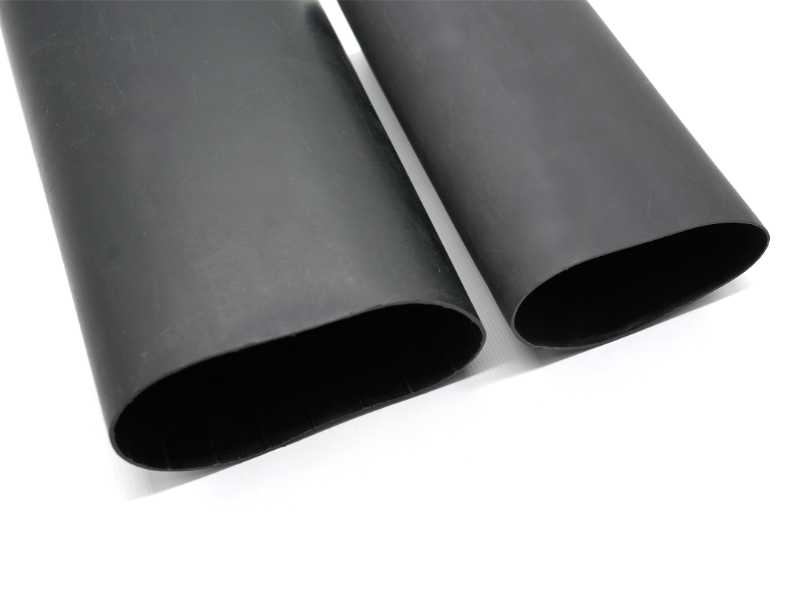
Taking the two CCMT products as an example, the total wall thickness of medium wall heat shrink tubing after shrinkage is about 1.75 - 3.70 mm depending on the specifications; the total wall thickness of heavy wall heat shrink corresponding to the specifications is about 2.30 - 5.10 mm. The reason why thick-wall designs are often chosen, however, is that when a cable or a connection has to resist the mechanical stresses involved in a very powerful extrusion force, stretching, shock, or wearing out, they have to be sufficiently protected by a robust external structure on the inside and the outside too.
The Sealing Methods Are Similar, But the Application Focus Is Different.
Both kinds of goods can take advantage of the composite "heat-shrinkable outer material + hot-melt adhesive inner layer" design, should the customers worry about water, moisture, and thermal protection.
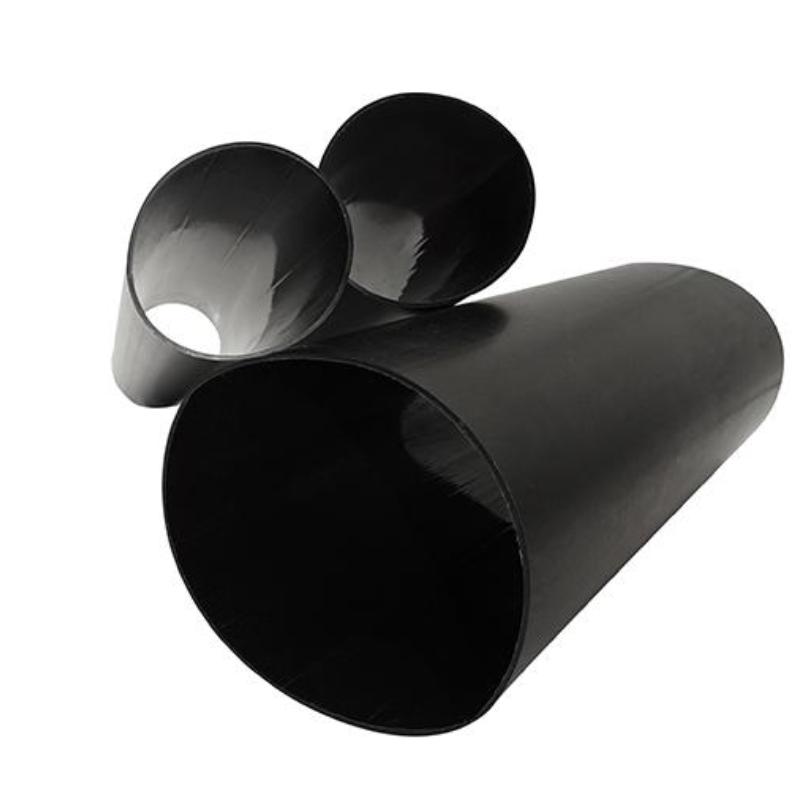
CCMT's medium wall heat shrink tubing uses a cross-linked polyolefin outer layer and a hot melt adhesive inner layer. After heating, the outer layer shrinks, and the inner glue layer melts and fills the gap between the cable and the sleeve, forming a continuous sealing layer.
Heavy wall heat shrink also adopts a structure combined with outer material and hot melt adhesive, but due to the larger overall wall thickness, its advantages are more reflected in mechanical protection in addition to sealing. Our thick-walled specifications range up to approximately 5.10 mm total wall thickness and are designed for mechanical stresses such as compression, tension and impact.
Therefore, if the project mainly faces environmental intrusion problems such as moisture, dust, and oil pollution, the mid-wall products can already meet the demand; if there are obvious mechanical collisions, friction, extrusion or long-term vibration at the same time, the thick-walled structure needs to be further considered.
Don't Just Look at the "Thickness" When Purchasing, But Also Look at the Size After Installation.
This is a point that is easy to ignore in actual procurement.
The heavy wall heat shrink has a larger size after shrinking, which will take up more installation space at the same cable outer diameter. Hence, the buyer should verify not only the outer diameter of the cable but also check if the product is installed in a small space, for example, the inside of the equipment, electrical cabinets or connection areas of limited space, that the buyer should check also.
· Whether the inner diameter can be inserted smoothly before shrinkage;
· Whether the inner diameter can be completely covered after shrinkage;
· Whether the total wall thickness after shrinkage meets the installation space;
· Whether the thickness of the hot melt adhesive layer meets the sealing requirements;
· Whether the length and axial changes after heat shrinkage affect the installation position.
The selection of heat shrink tubing itself needs to consider both the inside diameter in the supply state and the inside diameter after full shrinkage, rather than directly selecting the specifications based on the cable diameter.
Which Applications Are More Suitable for Midwall? Which Is More Suitable for Thick Walls?
In the actual selection, the buyer can make judgment according to the working conditions:
| Procurement Requirements | Products Worth Noting |
| Cable joint insulation and sealing | Medium-wall heat-shrink tubing |
| Cable termination protection | Medium-wall heat-shrink tubing |
| Automotive wiring harnesses and industrial equipment connections | Medium-wall heat-shrink tubing |
| Protection against environments involving moisture, dust, etc. | Medium-wall or thick-wall options available based on operating conditions |
| Cables subject to long-term friction | Thick-wall heat-shrink tubing |
| Exposure to significant impact or crushing forces | Thick-wall heat-shrink tubing |
| Outdoor connections or areas subject to high mechanical stress | Thick-wall heat-shrink tubing |
| Pipeline, oil & gas, and heavy industrial environments | Thick-wall heat-shrink tubing |
CCMT’s mid wall products primarily concentrate on insulation and sealing for various areas such as power cables, automobiles, industrial equipment, and communication cables. On the other hand, their thicker wall products are specially designed to cater to higher demands for mechanical protection in the fields of power generation, industrial automation, oil and gas, and automobiles.
How Should Buyers Choose?
When actually making an inquiry, it is recommended to quickly judge according to three questions:
1. Look at the environment.
If the main problems are moisture, moisture, dust and general wear, mid-wall heat shrink tubing can be a key consideration.
2. Look at the mechanical stress.
If the connection is subjected to long-term tension, extrusion, impact, friction or vibration, focus on evaluating thick-walled heat shrink tubing.
3. Look at the installation space and specifications.
Don't directly choose thick-walled products because "thick-walled protection is stronger".
In the end, the specification still needs to be determined based on the outer diameter of the cable, the size of the connector, the shrinkage ratio, and the wall thickness after shrinkage.
There is no simple "who is better" between medium wall heat shrink tubing and heavy wall heat shrink. The core difference lies in the matching between protection requirements and product structure. It is recommended that the purchaser also provide the outer diameter of the cable, the maximum outer diameter of the connection part, the use environment, the required shrunk size and the project voltage requirements during the inquiry stage, and then the supplier will confirm the appropriate specifications instead of purchasing based on the product name.
As a source manufacturer in the cable accessory industry, CCMT focuses on the research and development and production of heat shrinkable cable accessories. It also provides mid-wall and thick-walled heat shrinkable sleeves, and supports product supply of different specifications. It helps customers to pick the suitable cables based on their size and the requirement of their applications.