How Do You Select the Right Size for Heatshrink Bushing Boot Kits? What Dimensions Need to Be Verified Before Purchasing?
Selecting the appropriate size of heatshrink bushing boot kits cannot be judged solely based on the outer diameter of the cable. Before purchasing, the maximum size of the connection area, equipment interface, required coverage length, and cable outgoing direction should also be confirmed, and the product specification should be judged based on the shrinkage ratio to avoid installation difficulties, insufficient fit, or insufficient protection scope.
So, what size should the heatshrink bushing boot kits be measured? How should the 2:1 and 3:1 shrinkage ratios participate in specification selection? This article will identify and explain the essential size specification that should be verified while buying heat shrink sleeving. It will present a few different perspectives of procurement and installation to provide a detailed guide so that the potential buyers can check and avoid size matching problems before their inquiries and orders are placed.
Don't Just Measure the Outer Diameter of the Cable, But Also Measure the Connection Area.
The outer diameter of the cable is an important data when selecting a heat shrink sheath, but for the straight boot heat shrink cable right angle, the connection area is usually more worthy of attention than the pure cable diameter. For example, in switchgear, transformers, or other electrical equipment, the sheath may also cover:
· Cable body
· Connection location of cables and equipment
· Large-size area near wiring or connectors
· Transition area after the cable changes outgoing direction
Therefore, it is recommended to measure at least three data points before purchasing:
1. Rather than estimating the outer diameter of the cable from its model, it is more accurate to measure the outer diameter of the cable that actually needs covering by the sheath after the work is done.
2. Maximum outer diameter of connection area: If there are terminals, connections, superimposed insulation layers, or other structures at the connection location, measure the maximum size that actually needs to pass through the sheath.
3. Equipment interface or sleeve size: If one end of the sheath needs to be matched with the equipment interface, it is also necessary to confirm the outer diameter of the interface, covering length, and actual installation space.
Professional heat shrink product selection usually also considers the maximum size, minimum size, and restored size range of the parts to be covered, rather than just looking at a nominal diameter.
Why Can't the Sheath Be Directly Selected According to the Outer Diameter of the Cable?
This is a misunderstanding that easily occurs in the procurement process. Assuming that a cable has an outer diameter of 30 mm, it does not mean that it is correct to directly choose a "30 mm" heat shrink sheath.
Heat shrinkable products need to have enough inner diameter before installation so that the product can be smoothly inserted into the area that needs to be protected; after heating, they need to be able to shrink to a small enough size to form a good fit with the protected part. Therefore, when purchasing, you should also check:
· Supply status size
· Shrinkage size
· Actual covered part size
Rather than just looking at a certain size in the product name. This is particularly important for connection areas with different cross-section variations.
Shrinkage Ratio Is Data That Must Be Confirmed When Selecting a Model.
The shrinkage ratio of the straight boot heat shrink cable right angle directly affects the size range that a specification can adapt to. Simply put, 2:1 means that the diameter of the product after shrinkage is about half of the supply state;3:1 means that the diameter of the product after shrinkage is about one-third of the supply state. Therefore, a 3:1 product can often cover a larger range of size changes.
However, when purchasing, it cannot be simply understood as "the larger the contraction ratio, the better." What should really be judged is whether the size of the product supply status can be installed smoothly, and whether the shrunk size can cover and fit the actual connection area. Therefore, when making an inquiry, it is recommended that suppliers provide both pre-and post-shrinkage size tables instead of only providing one product model.
Heat Shrink Right Angle or In-Line Bushing Boot? Confirm the Outgoing Direction of the Cable First.
If the interior space of the equipment is relatively compact and the cable is drawn out from the side or at a specific angle, the right-angle sheath is usually easier to match with the actual structure; if the cable and the equipment interface basically maintain a straight line direction, a straight-through structure can be considered.
CCMT currently offers two structures: right-angle type and straight-through type, which correspond to different cable outgoing forms. The product page also specifically reminds that the cable outer diameter, equipment interface size and outlet direction need to be confirmed at the same time when selecting the model. The model cannot be selected just based on the product name.
This is why when a buyer sends an inquiry, it is better not to just write: "I need a 35 mm heat shrink sleeve sheath."
More effective information should include: cable outer diameter + connection/interface size + outgoing direction + required coverage length.
In this way, suppliers can judge specifications more accurately.
The Length Also Needs to Be Confirmed, Not Just the Diameter.
Especially for the right-angle sheath, its structure is not a simple straight tube, so it needs to be confirmed:
· Length of connection area to be covered
· Device interface location
· Location where the cable is bent or turned
· Whether both ends of the sheath can cover the target area
If the length is insufficient, even if the diameter is selected correctly, there may be a problem that part of the connection area is exposed to the outside of the sheath. Before bulk purchasing, it is best to confirm the length requirements together with the diameter and structural direction.
The Location of Hot Melt Sealant Should Also Be Included in the Purchase Confirmation.
If the procurement goal is not only insulation protection, but also to enhance sealing and environmental protection in the connection area, then the internal structure of the product needs to be further confirmed.
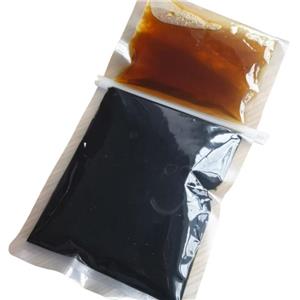
CCMT's heatshrink bushing boot kits are designed with hot melt sealant coated on the inner walls of both ends. Upon heating, the tube and the hot melt material shrink together which produces a snug connection at both ends of the items.
Here's a question that's easy to overlook: what buyers need to confirm is "where the sealant is located", not just asking "whether there is glue." Because the sealant structure of different products may be different, whether the sealing areas at both ends can cover the actual interface is an item worth confirming in addition to the size selection.
CCMT's 2:1 - 3:1 Shrinkage Ratio Provides Some Flexibility for Specification Matching.
Currently, our company provides a product series with a shrinkage ratio of 2:1 - 3:1. The corresponding specifications can be selected based on the outer diameter of the cable, the size of the equipment connection area and the actual structure. The product is made of polyolefin material and is available in both right-angle and straight-through structures; the minimum full recovery temperature of the product is 130 ° C, and the inner walls of both ends are designed with hot melt sealant, which also has resistance to electrical traces and ultraviolet rays.
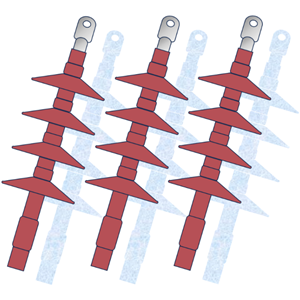
In addition, the existing specifications have listed the supply status size and restored size of different models (right-angle models include R1-R5, and straight-through models include S1-S3).
Heat Shrink Right Angle/In-line Bushing Boot
If the project has special size requirements or batch equipment structure differences, CCMT also supports customization of the size, specification, and color according to customer needs.
Contact CCMT for customized sizes, specifications, colors, and technical support.
Further matching can be made based on the actual connection area size, rather than simply purchasing according to the cable model.
Final Inspection Before Purchasing: Do Not Miss out on 5 Size Issues.
Before confirming your order for heatshrink bushing boot kits, you can check it again:
· Is the cable outer diameter the actual measurement value?
· Has the maximum size of the connection area been confirmed?
· Can the inner diameter of the sheath be installed smoothly when supplied?
· Does the shrunk size cover and fit the target area?
· Is the right-angle/straight-through structure consistent with the actual outgoing direction of the equipment?
If these five items have been confirmed and combined with the product's shrinkage ratio, length, sealing structure and use environment to make the final selection, it is usually more reliable than simply selecting the product based on the cable model.
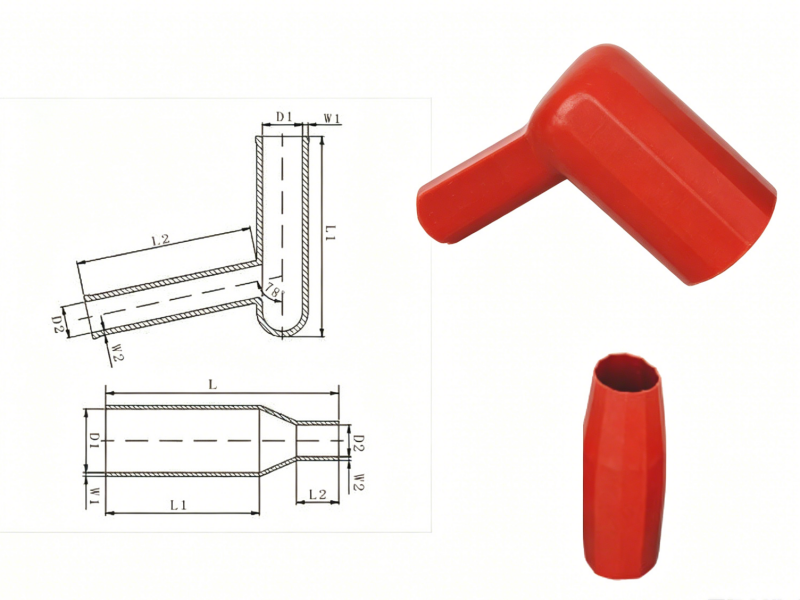
Whether the size of the straight boot heat shrink cable right angle is appropriate does not only depends on whether the cable can be inserted in, but also considers the passing size before installation, the fitting range after shrinkage, the size of the connection area and the actual outgoing direction.
CCMT's heatshrink bushing boot kits provide a shrinkage ratio of 2:1 - 3:1 and provide different installation options for switchgear, transformers and other electrical equipment connection areas through right-angle/through-pass structure, hot melt sealants at both ends, and multiple specifications. The actual size and structure information can be provided before purchasing to help you confirm the right product model more quickly.