How Do You Select the Appropriate Size of Heat-Shrinkable Feedthroughs Based on the Cable's Outer Diameter?
When a cable passes through a wall, equipment enclosure, or electrical box, the size of the through-wall parts cannot only be determined by the specification and model of the cable. The same kind of cable that looks similar from the outside is likely to have different outer dimensions in the insulation, sheath and manufacturing level. Problems such as the part of the casing being too big or too small, the seals not being tight which leaves some parts uncovered are only some examples of what may happen after the cable is mounted on a wall.
In actual engineering projects, the size of the wall opening and the on-site installation space also need to be considered. Therefore, when purchasing cable wall penetration parts, it is recommended to gradually confirm them according to the cable outer diameter, wall penetration structure and product retraction size.
First Confirm the Actual Outer Diameter of the Cable.
When selecting heat-shrinkable feedthroughs, the first thing you need to confirm is the outer diameter of the cable. The insulation and sheath thicknesses of different cables may differ, and even if the conductor specifications are the same, the final outer diameter may differ. You may verify by two kinds of methods as listed below before the purchase:
· Study the manufacturer's specification;
· Take the measurement of the existing cable's outer diameter.
In case several types of cables have been chosen for a project their outer diameter ranges (minimum and maximum) should be noted individually and then checked to fit the wall-piercing component size.
Check the Size of the Opening in the Wall or Equipment.
When installing heat-shrinkable feedthroughs on walls, equipment enclosures, or boxes, you also need to confirm that:
· Diameter or size of the through-wall hole;
· Wall or plate thickness;
· Cable entry direction;
· Whether there is enough installation space around the through-wall location.
If the product is selected only according to the outer diameter of the cable and the size of the opening is ignored, even if the through-wall member can cover the cable, it may not be properly installed on the actual structure. Therefore, it is best to prepare the cable outer diameter, through-wall hole size, and installation structure size at the same time before purchasing.
Determine Whether the Size Matches Based on the Shrinkage Range.
For heat shrinkable feedthroughs, attention should also be paid to the shrinkage ratio and retracted size of the product.
For example, a 2:1 shrinkage ratio and a 3:1 shrinkage ratio represent that the product has different size adaptation ranges before and after installation. The larger the shrinkage ratio does not mean that the product is necessarily suitable for all cables, but it means that the product has a larger range of size changes.
Therefore, it is necessary to confirm whether the size of the product before installation, the actual outer diameter of the cable, and the inner diameter after complete retraction can form a reasonable match.
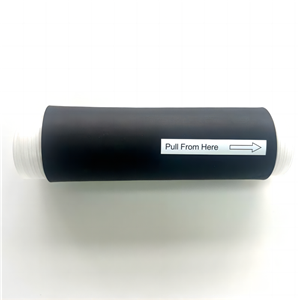
Taking CCMT's cable wall penetration parts as an example, its shrinkage ratio is 2:1 to 3:1, which can adapt to cables of different sizes and wall penetration structures within a certain range. The product specification also provides the supply status and relevant size after full retraction, which can be used for specification confirmation before purchase.
Don't Just Judge Whether It Can Be Installed or Not, But Also Consider the Sealing Effect.
The purpose of matching the size of the through-wall parts is not simply to put the product on the cable. Generally speaking, the through-wall position usually needs to block external factors such as moisture and dust. Therefore, whether the product can form a good fit with the cable and the through-wall area after being completely retracted is an issue that needs to be paid attention to when selecting a product.
· If the size is too large, the ideal fit may not be formed after retraction;
· If the size is too small, it may increase installation difficulty or fail to cover the target area.
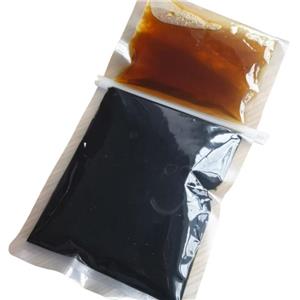
CCMT's heat-shrinkable feedthroughs are designed with a heat-shrinkable structure + internally coated sealant. After heating and shrinking, the sealant can further fill the gap between the cable and the through-wall area, enhancing the sealing effect. The product's size range, shrinkage rate, and sealing system should be verified at one time by the purchase instead of only comparing the pipe size parameter.
When Purchasing a Project, It Is Recommended to Confirm These Parameters at Once:
If a project contains multiple cable sizes, you can compile a simple size list before making an inquiry:
| Parameters to Be Confirmed | What to Know Before Purchasing |
| Cable Outer Diameter | Actual maximum and minimum outer diameters of the cable |
| Wall Penetration Hole Size | Dimensions of the opening in the wall or equipment |
| Installation Structure | Thickness and structure of the wall, enclosure, or equipment casing |
| Shrink Ratio | Range of size variations the product can accommodate |
| Recovered Dimensions | Inner diameter and length when fully retracted |
| Sealing Requirements | Requirement for additional waterproofing or dustproofing seals |
| Operating Environment | Indoor, outdoor, UV exposure, and other environmental conditions |
| Quantity and Specifications | Requirements for multiple cable sizes and bulk quantities |
This step can help buyers reduce repeated confirmation of specifications during the inquiry stage, and can also prevent suppliers from discovering that the product size does not match after receiving the goods.
CCMT's Heat-Shrinkable Feedthroughs Provide Flexible Matching for Different Size Needs.
CCMT was established in 1986 and has been specializing in the production of cable accessory products for more than 40 years. Our heat-shrinkable feedthroughs are made of a heat-shrinkable structure with a shrinkage ratio of 2:1 - 3:1, which can accommodate cables of different sizes and installation structures within a certain range. The interior of the product is coated with sealant, which can further enhance the sealing performance of the through-wall area after heat shrinkage. The product also has insulation and ultraviolet resistance properties, with volume resistivity ≥1014 Ω·cm, dielectric strength ≥12 kV/mm, and water absorption ≤0.5%. It can be used in indoor and outdoor power and industrial environments.
At present, our products are available in a variety of standard sizes, and we support customization of specifications and colors according to the actual requirements of the project. To handle cable specifications for engineering projects, the buyer can tell us the cable outer diameter, through-wall hole size and installation structure and we will find the appropriate product specifications for you.
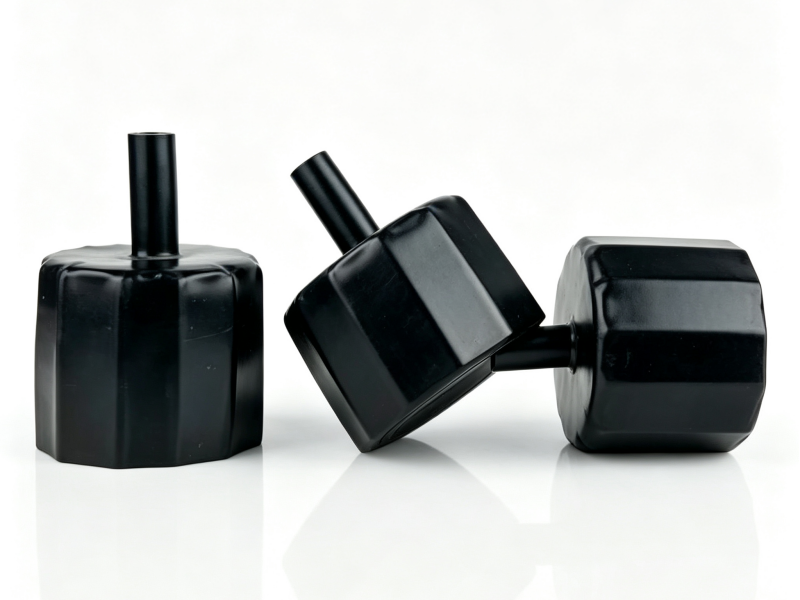
In addition to the cable's outer diameter, there are other factors to consider when choosing heat-shrinkable feedthroughs. Besides the product appearance, the selection should also be assessed in terms of through-hole dimensions, mounting structure, product shrinkage rate range, and closing performance post-retraction.
In case a project calls for accurate cable details, it would be the best if heat shrinking products which come in the biggest variety of sizes were a top priority. Moreover, you should definitely get the size confirmed before making the purchase. This will assist you in minimizing errors in selection, repeated purchases, and adjustments made on-site during the installation.