How Do You Correctly Install Heat Shrinkable Cable Feed-Throughs?
In order to get a good sealing effect for heat shrinkable cable feed throughouts, the main point is to make sure of the size, clean the surface, position accurately before installation, and use uniform heating to fully shrink the product. Any step treated improperly may influence the final sealing and insulation protection effect. Therefore, when installing cable wall penetration parts, it is not only necessary to select specifications that match the cable and wall penetration opening but also to control the heating process and check the retraction and sealing status of the product after installation is completed.
Confirm Cable and Opening Size.
Before installation, you first need to confirm the actual outer diameter of the cable and the size of the opening in the wall, panel, or equipment enclosure.
Wall seals should have a suitable shrinkage range. If the product specification is too large, it may not be possible to fully fit the cable after heat shrinkage; if the specification is too small, it may increase installation difficulty and even cause material damage. Generally, a larger shrinkage range can usually provide a larger space for size adaptation.
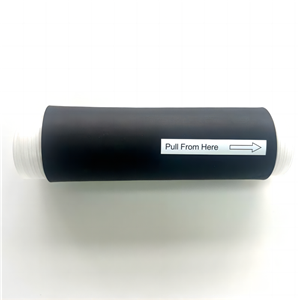
Take CCMT's heat shrinkable cable feed throughouts as an example. The shrinkage ratio ranges from 2:1 to 3:1. Depending on the cable's actual outer diameter, the most suitable specification can be chosen, making this option very appropriate for projects involving multiple cable specifications.
Clean Cables and Installation Areas.
Impurities like dust, oil and moisture can interfere with the close contact of the heat-shrinkable material with the cable or the installation surface, so you should make sure that the relevant area is clean and dry before carrying out the installation.
Also check for sharp edges or other structures that may damage the heat shrinkable material at the through-wall opening. If present, it should be disposed of before installation.
Accurately Locate the Heat Shrinkable Cable Feed Throughouts.
After cleaning is completed, move the wall through parts to the predetermined installation position. At this time, it is necessary to verify that the product is properly aligned with the cable, wall, or panel opening and ensure that the area that needs to be sealed is within product coverage. Positioning should be completed before heating. Adjusting the position after the product begins to retract can be more difficult and may affect the final seal position.
For structures with built-in sealant, it is also necessary to confirm that the sealant area is located at the intended sealing interface so that it can fully function during the heat shrink process.
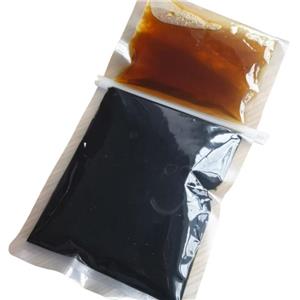
CCMT's cable feedthroughs for sealed protection use an internally coated sealant design, which can further enhance the sealing protection of the cable entrance area after the product is retracted after being heated.
Heat Evenly to Fully Retract the Product.
After product positioning is completed, heating is started. During heating, the heat source should be moved evenly around the product to avoid concentrated heating of a certain position for a long time. Uneven heating may cause rapid retraction of some areas while other areas are not sufficiently retracted.
As the temperature increases, the heat shrinkable material will gradually shrink towards the cable and mounting surfaces. Heating should be continued according to product requirements until the product reaches the specified retracted state.
The minimum temperature for complete retraction of this CCMT product is 130℃. During actual installation, the heating process should be controlled in conjunction with product specifications and field conditions, rather than shortening the installation time by excessively increasing the temperature. At the same time, it is necessary to avoid the heat source staying in the same position for long periods of time to reduce the risk of damage to the material or sealant due to overheating.
Check the Sealing Status After Cooling.
After completing the heat shrinkage, wait for the product to cool properly before checking the installation results.
First observe whether the product has been fully retracted and confirm that its position has not changed significantly. Then check whether there are obvious gaps between the cable and the product and between the product and the through-wall area. For products coated with sealant internally, it should also be observed whether the sealant forms a continuous sealing interface.
After installation, you can focus on checking:
· Has the product been fully retracted?
· Does it fit tightly with the cable?
· Is the sealed area continuous?
· Is there a significant gap between the cable and the product?
· Are there cracks, charring, or abnormal deformation?
· Does the product shift after heat shrinkage?
If the through-wall location is exposed to environmental factors such as moisture, dust, and ultraviolet light for a long time, inspection after installation is particularly important.
The Performance of Product Materials Is Also Worthy of Attention.
Correct installation is an important part to ensure the sealing effect, but the material properties of the product itself will also affect long-term performance. Cable feedthroughs for sealed protection may be affected by factors such as mechanical stress, moisture, temperature changes, and ultraviolet light during actual use. Therefore, in addition to confirming the size and installation method, buyers can also pay attention to the electrical and physical properties of the product.
CCMT's cable feedthroughs for sealed protection have insulation properties and ultraviolet resistance. Relevant test indicators include:
| Test Item | Test Method | Requirement |
| Tensile Strength | ASTM D 2671 | Minimum 12 MPa |
| Ultimate Elongation | ASTM D 2671 | Minimum 200% |
| Volume Resistivity | IEC 93 | Minimum 1014 Ω·cm |
| Dielectric Strength | IEC 60243 | Minimum 12 kV/mm (1.0 mm) |
| Water Absorption | ISO 62 | Maximum 0.5% |
| Heat Shock (225°C, 4 hrs) | ASTM D 2671 | No Cracking or Dripping |
| Density | ASTM D 792 | 1.0–1.1 g/cm3 |
Buyers may refer to these test data for assessing the material properties of products and the suitability of the project but cannot rely on it for the right size selection and standard installation, which are the aspects that these test data are not capable of replacing.
Common Installation Errors:
During actual installation, some problems can be avoided by doing a preliminary inspection.
· Selecting wrong specification: The cable's outer diameter, the size of the through-wall opening, and the product's heat shrinkage range should all be checked together before buying.
· Uneven heating: Excessive local heating can cause material damage, whereas insufficient heating may result in the product not retracting fully.
· The installation area is not clean: Oil, moisture and dust can potentially compromise the sealing interface bonding.
· Positioning is inaccurate: If the product is not positioned correctly before heating, it will be hardly movable after retraction.
· Retraction is not enough: The product failing to reach a fully retracted state may result in gaps being left in the sealing area.
Installation Inspection List of Cable Wall Parts:
Once completed installation, you may easily verify it with this checklist:
· Confirmed the cable outer diameter
· Through-wall opening size has been verified
· Cables and installation areas are clean and dry
· Products are positioned correctly
· Heating evenly during the entire heating process
· The product has been fully retracted
· Made final inspection of sealed areas
· No visible cracks, charring, deformation, or gaps
Sealed protection cable feedthrough installation itself is pretty straightforward only making the installation easier but without size matching, cleaning the surface, accurate positioning, uniform heating, and inspection after installation these are the fundamental activities that must be carried out. When buyers confirm the product specifications, besides understanding the shrinkage range, they should also learn about the seal structure and the performance of the materials so that they can minimize sealing risks during field installation and later use.
Protect Your Cable Systems with Heat Shrinkable Cable Feed Throughs
Our heat shrinkable cable feed throughs feature a shrink ratio of 2:1 to 3:1 and come with internal sealant. They offer insulation and UV resistance, and custom colors are available to meet project requirements.
Contact CCMT for product specifications, customized colors, and technical support.