How Do You Choose the Right Heat Shrinkable Cable Termination?
Selecting the appropriate heat shrinkable cable termination not only needs to consider the rated voltage of the product, but also needs to comprehensively evaluate the cable structure, insulation size, installation location and actual operating environment. If the terminal does not match the cable, it may lead to uneven distribution of electric field, tidal intrusion, partial discharge or premature deterioration of insulation performance. Therefore, it is helpful to reduce the installation problems and improve the reliability of long-term operation of cable accessories by clarifying the selection factors before procurement.
The Product Selection Range Is Determined According to the Voltage Level.
The voltage level is the first factor to be considered when selecting the heat shrinkable cable terminal. Different power systems have different requirements for insulation level, and terminal products must match the electrical parameters of cables and connecting equipment.
Before selecting a product, purchasers should be familiar with three common voltage designations:
U₀: The rated power-frequency voltage between a conductor and the ground or a metallic shield.
U: The rated power-frequency voltage between conductors.
Uₘ: The maximum voltage for equipment, representing the highest system voltage for which the equipment is designed.
These parameters need to be checked in combination with the electrical specifications of the project, and they cannot be simply regarded as interchangeable values.
Heat shrinkable cable termination is suitable for power systems with different voltage ranges, from low-voltage distribution to medium-voltage power grids. For example, common medium voltage systems may involve voltage classes of 6 / 10kV, 8.7 / 15kV, 12 / 20kV and 18 / 30kV, depending on the system voltage and applicable standards.
Confirm the Terminal Suitability According to the Cable Specification.
The size and structure of two cables with the same voltage level may also be different. These differences will directly affect the suitability of heat shrinkable cable termination.
Therefore, in the selection, the following cable parameters need to be checked:
· Conductor cross-sectional area
· Insulation outer diameter
· Cable structure
· Insulation materials
Therefore, when selecting the heat shrinkable cable terminal, the product model cannot be determined only based on the voltage level. The differences in size and structure of different cables will affect the adaptation range, installation fit and insulation sealing effect of terminal components. The purchaser should confirm the specific specifications of the cable in advance and check with the applicable scope of the terminal product to ensure that the product can meet the actual cable structure and installation requirements.
Select Indoor or Outdoor Heat-Shrinkable Cable Terminals According to the Installation Location.
Indoor and outdoor heat shrinkable cable terminations may differ in terms of external protection structure and electrical design requirements.
· Indoor heat shrinkable cable terminal:
It is usually installed in switchgear, power distribution room, substation and other closed electrical facilities. The selection mainly focuses on insulation performance, electrical clearance, installation size and compatibility with connecting equipment.
Because indoor installation usually avoids direct rain and sunlight, its external protection structure may be different from outdoor products.
· Outdoor heat shrinkable cable terminal:
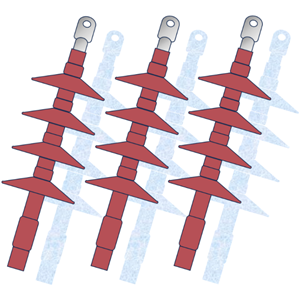
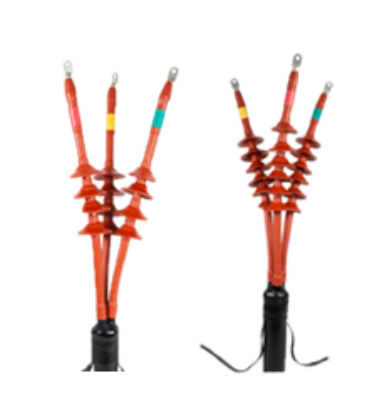
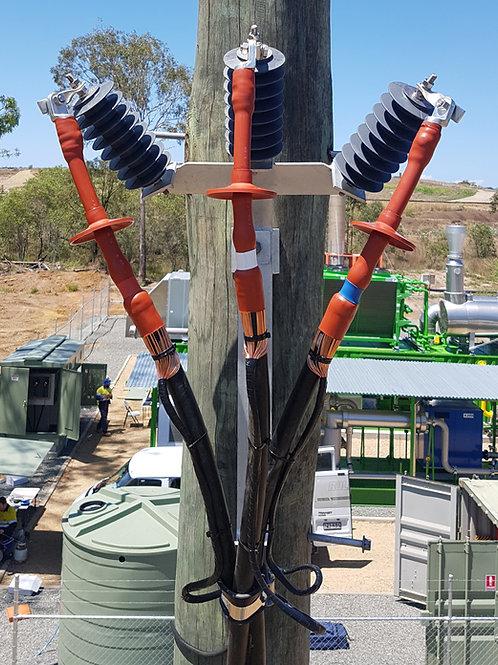
The outdoor installation environment will make the cable terminal long-term affected by weather changes, including rainfall, humidity, ultraviolet radiation and temperature fluctuations. According to the voltage level and environmental requirements, outdoor terminals may use rain skirts or other auxiliary protective structures. The rain skirt can increase the effective creepage distance of the insulation surface, thereby reducing the risk of surface flashover in wet or polluted environments.
Note: The actual selection also needs to consider the creepage distance, pollution level, external insulation design and applicable standards.
Evaluate Product Requirements in Combination with the Actual Installation Environment.
In addition to the basic classification of indoor and outdoor, the actual operating conditions on site will also have an important impact on the terminal selection.
· Humidity and moisture
High humidity and water immersion may affect the insulation performance, especially the cable connection and sealing interface. A reasonable sealing structure helps to protect the exposed parts of the cable and reduce moisture intrusion.
· Ultraviolet irradiation
The terminal installed in the open area may be exposed to sunlight for a long time, so it is necessary to consider the weather resistance of the outer sheath and related materials to avoid material aging caused by long-term ultraviolet irradiation.
· Pollution and salt fog
Dust, salt or other pollutants may exist in industrial facilities, coastal areas and chemical plants. These pollutants are likely to increase the risk of leakage on the insulation surface, and may cause flashover in severe cases. Therefore, it is necessary to reasonably determine the creepage distance and external insulation structure according to the degree of on-site pollution.
· Temperature change
Repeated heating and cooling may cause the cable accessories to bear mechanical stress. It is necessary to pay attention to the flexibility and thermal stability of the material and the applicability of the sealing interface at the expected operating temperature.
Therefore, the buyer in the choice of heat shrinkable cable termination, recommended to provide as much information as possible the actual installation environment.
Common Errors in Selecting Heat-Shrinkable Cable Terminations.
During the procurement process, certain easily overlooked details can lead to subsequent technical or installation issues.
· Considering only the voltage rating: Meeting the voltage rating requirement does not guarantee that the product is suitable for the specific cable dimensions or the installation environment.
· Overlooking the insulation outer diameter: Inaccurate sizing can compromise the fit of the heat-shrink components and their sealing effectiveness.
· Confusing indoor and outdoor applications: Failing to account for actual environmental exposure conditions can negatively impact the long-term insulation performance of the product.
· Ignoring cable construction: Single-core and three-core cables may require different configurations of termination components.
· Disregarding project technical standards: The electrical performance and testing requirements of the products must align with the specific project specifications and applicable standards.
Conducting a thorough technical review before placing an order is generally far more efficient than attempting to resolve specification mismatches after the products have been delivered.
What Information Should Be Provided When Procuring Heat-Shrinkable Cable Terminations?
To ensure that manufacturers can accurately match the appropriate heat-shrinkable cable terminations, it is recommended that purchasers prepare the following information when requesting a quote:
| Selection Parameters | Required Information |
| Rated Voltage | U0/U (Um) or System Voltage |
| Cable Type | XLPE, EPR, or Other Insulation Types |
| Conductor Size | Conductor Cross-Sectional Area (mm²) |
| Cable Configuration | Single-Core or Three-Core |
| Insulation Outer Diameter | Actual Measured Insulation Outer Diameter |
| Installation Location | Indoor or Outdoor |
| Environmental Conditions | Humidity, UV Exposure, Pollution, Salt Spray, and Other Conditions |
| Applicable Standards | IEC, IEEE, or Project-Specific Standards |
| Order Quantity | Required Kit Quantity and Project Demand |
It is recommended to provide complete technical parameters to help manufacturers evaluate cable suitability, determine appropriate terminal component configuration, and clarify relevant technical requirements before mass production.
Make the Selection of Heat Shrinkable Cable Terminal More Accurate.
The selection of heat shrinkable cable terminal needs to comprehensively consider electrical requirements, cable size and actual installation conditions. The voltage level determines the basic product selection range, and the cable structure and environmental factors further affect whether the specific terminal design is applicable.
For cable accessories dealers, power engineering contractors and power project procurement personnel, clear technical parameters are an important basis for avoiding product specifications mismatch and improving procurement efficiency.