Why Does the Seal Fail After Installing Right Angle Heat Shrink Boots? An Analysis of Common Installation Issues.
After installation of the heat shrink sleeve sheath, if the two ends are not tightly fitted, the hot melt adhesive does not form an effective seal, or there are still obvious gaps in the connection area, it does not necessarily mean that there is a problem with the product itself. Besides sealing performance, product characteristics and preparation of mounting surface, positioning technique, heating method and post-installation check can be factors affecting sealing result. For right angle heat shrink boots, buyers should not only pay attention to whether the product can shrink, but also confirm whether continuous and stable seal protection is truly formed after installation.
Just Because the Sheath Has Shrunk Does Not Mean That the Seal Has Been Completed.
During the installation process, if you see that the sheath has shrunk significantly, the installation is considered complete. It should be noted that sheath shrinkage and sealant formation of an effective fit are two related but not identical processes.
During the heating process, the heat shrinkable material shrinks, and the internal hot melt sealant needs to soften and form a fit with the cable and equipment connection areas. If the sheath has shrunk but the sealant does not function fully, there may still be insufficient sealing in the connection area.
Therefore, further observation is needed after installation: Is the sheath fully restored? Does the sealing area fit? Does the hot melt adhesive form a continuous sealing interface in the right place?
Oil, Dust or Moisture in the Installation Area.
If the product specifications and structure are selected correctly, but poor sealing still occurs after installation, the first thing worth checking is the state of the sealed surface. Cable sheaths, equipment interfaces and connection areas, if present:
· Oil pollution
· Dust
· Moisture
· Loose particles
· Other surface pollutants
Both may affect the actual contact between the hot melt sealant and the protected surface. Hence, preliminary to the actual heating process, it is recommended to clean the designated places strictly following the product installation guidelines so that the spots where seals will be created will be appropriately conditioned for their setup.
Insufficient Heating May Cause the Sheath to Not Fully Recover.
Heat shrinkable products need to meet corresponding thermal activation conditions to complete the designed shrinkage process. If heating is insufficient, it may occur:
· Sheath not fully restored
· Inconsistent shrinkage in local areas
· There is still a gap between the sheath and the protected part
· Hot melt sealant does not soften and flow sufficiently
· Insufficient fit in the sealing areas at both ends
Therefore, when judging whether the installation is completed, it is not recommended to judge based solely on the heating time. It is recommended that purchasers check technical documentaion, installation instructions and specific product requirements supplied by the manufacturer before taking into consideration the heating parameters of other products.
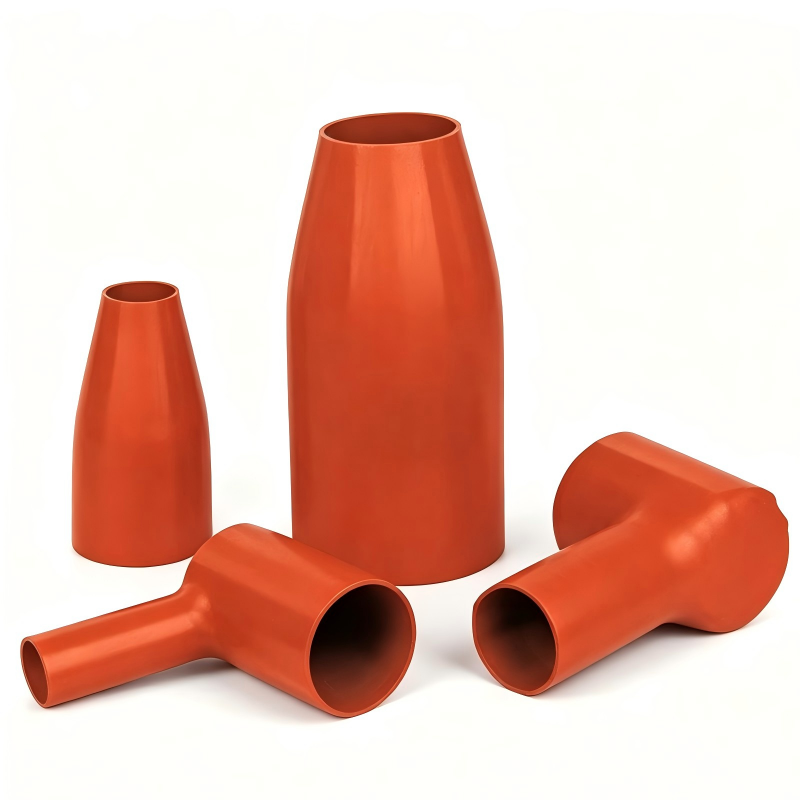
Take CCMT's right angle heat shrink boots as an example. It uses polyolefin materials with a minimum full recovery temperature of 130 ° C, and the inner walls of both ends are pre-coated with hot melt sealant. When heat shrinkage operation is done during a real installation, it should be performed as per the specifications and the technological demands of the material involved.
Uneven Heating May Also Cause Insufficient Local Sealing.
If heat is concentrated in one location for a long time and other areas are not sufficiently heated, there may be a situation where one end has shrunk significantly while the other end has not fully recovered.
This is particularly noteworthy for right-angle sheaths. Because the product itself has preformed corners, it is necessary to pay attention to simultaneously during the installation process: straight area + corner area + seal area at both ends, rather than continuously heating only a certain position.
When formulating on-site installation SOP, purchasers should establish more intuitive installation judgment standards, such as uniform recovery, no obvious scorch or deformation, and good fit in the sealed area.
Improper Distance from the Heat Source or Operation Method May Damage the Sheath.
If the heat source is too close, the local residence time is too long, or the operation is uneven, it may cause overheating of the material surface, causing:
· Scoring
· Discoloration
· Bubbles
· Local deformation
· Material damage
In this case, even if the sheath has shrunk, it cannot be simply assumed that the sealing effect must be reliable. It is suggested that the buyers carry out sample check before they carry out or replace products for the first time. By this, they will know that a stable installation effect can really happen between the equipment, sheath, heat source and operating style when they carry out batch production.
Incorrect Installation Position of the Sheath May Also Affect the Seal.
The sheath should be in the correct position before heating. If the product is not installed in the predetermined position, after the heat shrinkage is completed:
· Sealant does not cover the target interface
· Offset position of sheath end
· Some connection areas are exposed
· Deviation in the direction of the right-angle structure
· Seal area is not in the intended connection position
This is especially true for preformed right-angle sheaths. Because the right-angle product itself has determined the outgoing direction, if the direction during installation does not correspond to the actual structure of the equipment, even if the heat shrinkage is finally completed, the ideal coverage effect may not be achieved.
CCMT's products adopt right-angle and straight-through pre-formed structures to correspond to different cable outgoing directions; therefore, it is necessary to keep the product structure consistent with the actual routing direction of the equipment during installation. If you still have doubts about the choice of right-angle type and straight-through type, you can refer to the previous article "How to Choose Heat-Shrink Right Angle or In-Line Bushing Boots? Determining the Suitable Type Based on Cable Construction."
The Hot Melt Sealant Does Not Form an Effective Glue Line, And Requires Key Inspection.
Take our right angle heat shrink boots as an example. The inner walls of both ends are coated with hot melt sealant. During the heating process, the sheath shrinks and the sealant softens simultaneously. The sealant is used to strengthen the fitting and sealing of the connection area between the cable and the equipment.
Therefore, if you discover after installation:
· There is still a significant gap at both ends
· No continuous fit is formed in the sealed area
· The adhesive condition on one side is obviously abnormal
· The sheath has shrunk but the interface area is still loose
The installation process should be further checked. It should be noted that the sealant systems of different heat shrinkable sheaths are different, and the appearance and allowable state of the adhesive after installation may also be different. Therefore, the final inspection standard should be based on the technical requirements of the specific product.
After Installation, What Should the Buyer Focus on Checking?
1. Whether the sheath is fully restored: Observe whether there are still significant unshrunk areas.
2. Whether both ends fully fit into the connection area: Pay special attention to the equipment interface and the position where the cable enters the sheath.
3. Whether the sealing area is intact: Verify that the connection area that needs to be protected is not exposed due to offset of the installation position.
4. Whether there are obvious charring, bubbles or severe deformation: Heating method should be checked further if abnormal appearance is noticed.
5. Whether the right angle direction is correct: After the right angle sheath is installed, the direction of the sheath should correspond exactly with the direction of the cable being taken out.
6. Whether the status of hot melt sealant meets product requirements: The sealing status should be confirmed in accordance with the installation requirements of the corresponding product.
How Does CCMT's Right Angle Heat Shrink Boots Reduce Sealing Risks After Installation?
CCMT's right angle heat shrink boots are designed with a preformed structure + hot melt sealant at both ends + polyolefin material, with a shrinkage ratio of 2:1 - 3:1 and a minimum full recovery temperature of 130 ° C. For batch projects, we can match the model according to the equipment structure and actual installation; if there are special specifications, CCMT also provides customized services such as product specifications and colors.
CCMT has its own production system and has been engaged in the research and development and production of heat shrinkage, cold shrinkage, cable termination and other cable accessory products for more than 40 years. We operate around a 10,000 square meter production base, our production team is above one hundred, with more than forty pieces of professional production equipment also in play. Not to mention that we have set up a quality management system compliant with ISO 9001:2015.
This kind of production strength also means that in addition to product selection, you can also comprehensively evaluate whether suppliers are suitable for long-term project procurement from aspects such as specification confirmation, batch supply, technical information and customization capabilities.

If you encounter problems such as incomplete sheath shrinkage, insufficient end fit, abnormal sealant state, or mismatch of right-angle structure installation during actual installation, you can provide the product model, equipment interface photos or structural drawings, and on-site photos after installation. CCMT can help determine the problem based on specific installation conditions.