What Is a Tri-Layer Heat Shrink Tube, And What Is the Function of Each of the Three Layers?
The tri-layer heat shrink tube does not simply superimpose three layers of materials together, but integrates electrical stress control, insulation protection and elastic recovery functions into one heat shrink tube through a co-extrusion structure of semiconducting layers, insulating layers and elastic layers. In the actual selection process, what buyers really need to understand is: What problems are solved by the three layers? Why do we need a co-extrusion structure? and how these structures affect the long-term use of cable joints.
What Is a Tri-Layer Heat Shrink Tube?
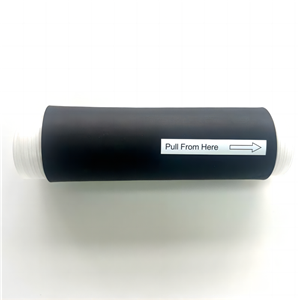
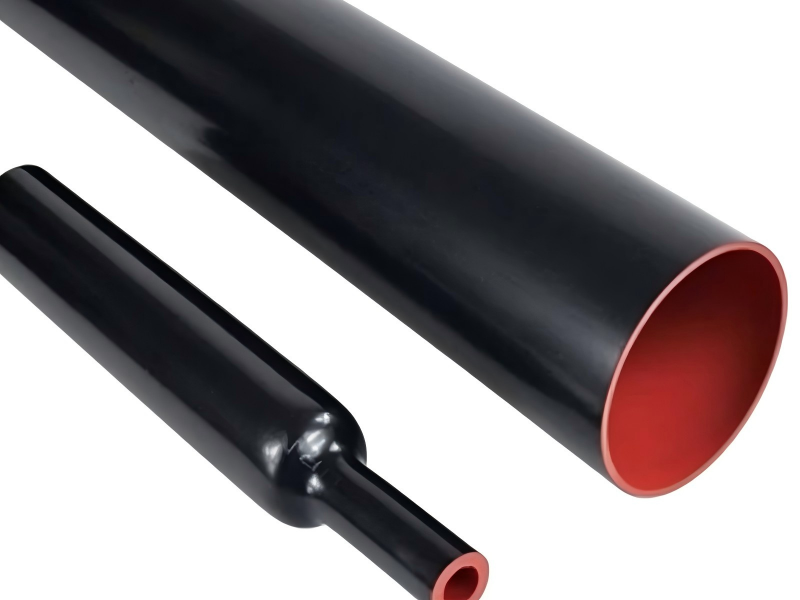
It is a thick wall heat shrinkable product used for insulation treatment of power cable joints. Compared with ordinary single-layer heat shrinkable tube, it adopts three-layer functional structure and forms an integrated composite tube body through co-extrusion process.
The external insulation material at the cable joint not only needs to provide basic insulation coverage, but also needs to cope with temperature changes and size changes that occur during operation. Therefore, when purchasing, we cannot only focus on the outer diameter and shrinkage ratio of heat shrink tubing, but also pay attention to its structure, insulation properties, resilience, heat resistance and low-temperature performance.
Take CCMT's tri-layer heat shrink tube as an example. Our product adopts a three-layer structure (semiconducting layer + insulating layer + elastic layer) and adopts a cross-linked thick-wall design with high retraction force. The product is suitable for voltage classes 6 - 36kV and can be used for insulation treatment of power cable joints up to 42kV.
What Are the Functions of the Three-Layer Structure?
The core value of the three-layer co-extrusion structure is that different functional layers undertake different tasks, rather than having one material bear all performance requirements at the same time.
1. Semi-conductive layer: used for electrical stress control.
Cable joints belong to areas where the cable structure changes, so the electrical performance requirements are more stringent than the external protection of ordinary cables.
The semiconducting layer in the tri-layer heat shrink tube mainly undertakes the functions of electrical stress control, and cooperates with the insulating layer to carry out corresponding electrical structural treatment on the joint area. This is why it is not possible to simply replace the composite structure designed for cable joints with ordinary insulating heat shrink tubing during procurement.
Both the inner and middle layers of our tri-layer heat shrink tube were tested for dielectric strength and volume resistivity:
· Dielectric strength: inner layer ≥15 kV/mm; middle layer ≥15 kV/mm
· Volume resistivity: inner layer ≥1014Ω·cm; middle layer ≥1013Ω·cm
2. Insulation layer: provides primary insulation protection.
The insulation layer is the core electrical protection part of the three-layer structure, and its main role is to provide the required insulation coverage for cable joints. It must not only have sufficient dielectric properties, but also maintain corresponding properties under long-term temperature changes, humid environments and mechanical changes.
As a reference, you can learn about the middle layer test data of CCMT products:
· Dielectric strength: ≥15 kV/mm
· Volume resistivity: ≥1013Ω·cm
· Tensile strength after heat aging: ≥10.5 MPa
· Elongation at break after thermal aging: ≥350%
· Thermal durability: 105℃
· Water absorption at 23℃/336h: ≤0.5%
These data have more purchasing reference value than simply describing "having good insulation properties", because buyers can further check them against their own project standards and technical specifications.
3. Elastic layer: helps maintain the contracted fit.
Cable joints will be affected by load and temperature changes during actual operation, and cable insulation materials will also expand and contract. If the resilience and elasticity of the external material are insufficient, the bonding pressure may decrease or the interface gap may change after long-term operation. Therefore, the elastic layer in the three-layer structure bears the related role of elastic recovery and size adaptation.
CCMT adopts a cross-linked thick-walled structure and emphasizes high retraction forces. After heat shrink installation, the pipe can continue to shrink towards the joint area, helping to maintain fit with the protected area.
Outer test data also reflects its mechanical properties:
· Initial tensile strength: ≥20 MPa
· Initial elongation at break: ≥350%
· Tensile strength after aging at 158℃/168h: ≥16 MPa
· Elongation at break after aging: ≥300%
· Thermal durability: 135℃
· 250℃/30min thermal shock: no crack, no slip, no movement
· -40℃/4h low-temperature flexibility: no cracking
Therefore, when purchasing, we should not just look at whether the product can shrink, but also pay attention to the mechanical properties after shrinkage and the performance retention in long-term hot and cold environments.
Why Use "Three-Layer Co-Extrusion" Instead of a Simple Multi-layer Combination?
The "three layers" solve the division of functions, while the "co-extrusion" solve the structural integration. The co-extrusion method produces a composite pipe that incorporates the semiconducting layer, insulating layer and elastic layer. The value is not just that the product structure looks more complex, but that different functions can work together in the same heat shrink component.
Therefore, when evaluating supplier products, it is recommended to focus on asking:
· What functions do the three floors perform?
· Is a true co-extrusion structure used?
· What test data is available for each functional layer?
· What is the performance after heat aging?
· What is the voltage level applicable to the product?
· What is the actual matching range of cable specifications?
· Why does three-layer co-extrusion composite heat shrink tube require high retraction force?
The shrink tubing shrinks after heating, but it does not mean that the task is completed when the installation is completed. Products also need to maintain fit into protected areas during operation. CCMT's tri-layer heat shrink tube adopts a cross-linked thick-walled structure with high resilience; the product shrinkage ratio is 2.5:1.
In the actual specification selection, in addition to confirming whether the product covers the target voltage level, the buyer should also match the cable outer diameter, joint size, product before shrinkage size, and post-shrinkage size. Rather than determining whether a product is fit based only on the figure "2.5:1".
When Purchasing a Tri-Layer Heat Shrink Tube, Which Parameters Are Worth Confirming?
| Verification Items | Why It Matters |
| Voltage Rating | Verify suitability for the target cable system |
| Three-layer Structure | Make sure the semi-conductive, insulating, and elastic properties are according to the requirements of the project |
| Shrinkage Ratio | Make a judgment regarding the degree to which the product is able to accommodate differences in the installation sizes or dimensions |
| Cable and Joint Dimensions | Confirm compatibility of actual specifications |
| Dielectric Strength | Determine if insulation performance meets project requirements |
| Volume Resistivity | Gain further insight into the material's electrical properties |
| Thermal Aging Data | Evaluate performance retention under long-term thermal exposure |
| Low-temperature Flexibility | Suitable for projects involving low-temperature operating conditions |
| Water Absorption | Assess the material's suitability for humid environments |
| Environmental Requirements | Verify compliance with project requirements regarding halogen-free status and hazardous substance controls |
CCMTs product test data includes ASTM D2671, ASTM D570, IEC 216 & other test standards. For example, the volume resistivity of the outer layer is ≤1014 Ω·cm, and the low-temperature flexibility tests of the inner layer and the middle layer are-55 ℃/4h and-40 ℃/4h respectively, and there is no crack. The overall product adopts halogen-free design and provides halogen control data related to IEC 61249-2-21.
Conclusion: The Value of Three-Layer Co-Extrusion Lies in the Synergy of Different Functions.
For cable joints, the semiconducting layer is responsible for electrical stress control, the insulating layer provides insulation protection, and the elastic layer helps achieve recovery and bonding. The three are co-extruded to form an integrated structure, and combined with the retraction force of the cross-linked thick-walled structure, the product can provide corresponding insulation treatment solutions for this special part of the cable joint.
What buyers really deserve attention is not the product name itself, but whether the three-tier structure meets the project requirements. Do the voltage levels match? Are the size and 2.5:1 shrinkage ratio suitable for the actual joint? Are the test data complete? Can the supplier provide corresponding specifications and technical data?
CCMT's tri-layer heat shrink tube is suitable for voltage classes 6 - 36kV and can be used for insulating power cable joints up to 42kV. If you are selecting a specific cable joint project, it is recommended to provide us with the voltage level, cable size, joint size and required quantity, and we will further confirm the appropriate product specifications for you.